Learning is more than a skill. It is as a posture toward everything, a way of framing all experience as a learning opportunity or learning process. In the context of an organization, how can we learn to learn? How do we make the most of every experience, success or failure, mistake or serendipity? How do we use these experiences to grow and prepare for those serendipitous moments? Talented workers will recognize opportunities, bounce them off others and act as mechanisms for creating success. Performance management should come in to play when learning is involved. Employees should be coached on how to process a mistake. They should understand punitive measures for misappropriating an error. Management should treat learning as they treat policy, with delicate appraisal and constant revision.
Learning extends into many areas of performance. Research was conducted on how learning and goal setting affects an individual's emotional regulation.
What does it mean to have performance goals for emotion regulation? What would it mean to have learning goals for emotion regulation? Just as people with learning goals for academic achievement seek to improve and learn from their mistakes, people with learning goals for emotion regulation seek to improve their ability to handle emotions. Just as individuals with learning goals for achievement view setbacks as an opportunity to learn and improve their ability, people with learning goals for emotion regulation view emotional difficulties as opportunities for growth and development. (Rusk Tamir and Rothbaum, 445)
Research shows that depression in the workplace comes from setting the bar too high. Thought suppression is an avoidance of negative thoughts and the end result is a tendency to dwell on the negativity. As a result, individuals build a case against themselves.
Individuals with higher performance goals were more likely to experience rumination, thought suppression, and depressive symptoms. The relation between performance goals and depression differed for those with high versus low beliefs about emotion regulation ability, with individuals scoring high in performance goals and low in beliefs reporting more depressive symptoms than other participants. While learning goals for emotion regulation were negatively associated with rumination and depressive symptoms, learning goals for emotion regulation were negatively associated with rumination and depressive symptoms, learning goals did not significantly predict depressive symptoms when controlling for beliefs about emotion regulation ability. (Rusk Tamir and Rothbaum, 449)
Take Away Points
Sources
Performance and learning goals for emotion regulation; Natalie Rusk, Maya Tamir, Fred Rothbaum;
Wednesday, December 11, 2013

Tuition Reimbursement
Tuition reimbursement supports learning within the organization. If a company invests in the education of their workers, they should be specific and consider the strategies and objectives of the organization - not the strategies and organizations of the individual. A company will not see returns by reimbursing flights of fancy. However, they should take into consideration the overall enrichment of the individual as well. Exploratory learning is often good for the individual, though it may be counterproductive for the organization as a whole.
Studies show four patterns in those enrolled in tuition reimbursement programs. They held complex feelings toward dual roles of work and school and toward the tuition program. They utilized career adaptable coping behaviors that delayed school progress. Workplace features including policies and supervisors influenced the nature of participants' conflicts and supports. And participants expressed nontraditional, yet integrative student experiences. (Gagnon and Packard, 396)
When the organization chooses to pave the way for higher education, individuals are able to progress toward their career goals. As a benefit of employment, this aids in talent retention. Some people wouldn't go back to school without tuition reimbursement.
Yet employers will only pay for higher education that fulfills their strategies and objectives. Some may see the degree that the employer chooses as helpful to their career, but have a natural inclination to another field of study. There will be a necessary adaptation for individuals that are pursuing higher education to suit the needs of the organization that is paying for it. (Gagnon and Packard, 487)
Advancement of career goals is the most important factor in signing to a tuition reimbursement program. Individuals will have to adapt to the organization and not the other way around. Despite the obstacles individuals may face between competing work and school responsibilities, they will carry on with this adaptation for the greater good. (Gagnon and Packard, 487)
The duality of work-school importance is more of a priority for the individual than the organization. Performance at school is the responsibility of the individual and the organization need only to inspire them further. Since employment provides participants of tuition reimbursement with a means of living and an opportunity to pursue higher education and career advancement, they may find difficulty in choosing which role is most important. Few will say that work takes priority over school. (Gagnon and Packard, 487)
Also, 95% of corporations have systems in place to financially support employee education but if you parse those numbers, a tiny fraction goes to colleges and universities. This research implies that colleges and universities are to blame as they are out of touch with the needs of organizations and how they intend to develop their workforce. (Investment Weekly News, 654) Research shows tuition reimbursement programs have low participation rates and internally developed programs within organizations have low success rates.
Take-Away Points
An Overwhelming Climb: The Copmlexities of Combining College, Full-Time Work, and Company Tuition Assistance; Janelle L. Gagnon and Becky Wai-Ling Packard; http://jcd.sagepub.com/content/39/6/479.full.pdf+html
http://www.lexisnexis.com/hottopics/lnacademic/?verb=sr&csi=337920&sr=HLEAD%28Research%20Shows%20Universities%20and%20Colleges%20Are%20Missing%20Out%20on%20Critical%20Revenue%20Stream%29%20and%20date%20is%202012
Studies show four patterns in those enrolled in tuition reimbursement programs. They held complex feelings toward dual roles of work and school and toward the tuition program. They utilized career adaptable coping behaviors that delayed school progress. Workplace features including policies and supervisors influenced the nature of participants' conflicts and supports. And participants expressed nontraditional, yet integrative student experiences. (Gagnon and Packard, 396)
When the organization chooses to pave the way for higher education, individuals are able to progress toward their career goals. As a benefit of employment, this aids in talent retention. Some people wouldn't go back to school without tuition reimbursement.
Yet employers will only pay for higher education that fulfills their strategies and objectives. Some may see the degree that the employer chooses as helpful to their career, but have a natural inclination to another field of study. There will be a necessary adaptation for individuals that are pursuing higher education to suit the needs of the organization that is paying for it. (Gagnon and Packard, 487)
Advancement of career goals is the most important factor in signing to a tuition reimbursement program. Individuals will have to adapt to the organization and not the other way around. Despite the obstacles individuals may face between competing work and school responsibilities, they will carry on with this adaptation for the greater good. (Gagnon and Packard, 487)
The duality of work-school importance is more of a priority for the individual than the organization. Performance at school is the responsibility of the individual and the organization need only to inspire them further. Since employment provides participants of tuition reimbursement with a means of living and an opportunity to pursue higher education and career advancement, they may find difficulty in choosing which role is most important. Few will say that work takes priority over school. (Gagnon and Packard, 487)
Also, 95% of corporations have systems in place to financially support employee education but if you parse those numbers, a tiny fraction goes to colleges and universities. This research implies that colleges and universities are to blame as they are out of touch with the needs of organizations and how they intend to develop their workforce. (Investment Weekly News, 654) Research shows tuition reimbursement programs have low participation rates and internally developed programs within organizations have low success rates.
Take-Away Points
- Organizations will fund higher education if it suits their objectives and strategies. Individuals should, in turn, seek employment with a company that suits their interests.
- The duality of work-school importance is a major challenge for participants of tuition reimbursement. Many don't put work over school and keep them both on an even keel.
- Colleges and universities are out of touch with the needs of management.
An Overwhelming Climb: The Copmlexities of Combining College, Full-Time Work, and Company Tuition Assistance; Janelle L. Gagnon and Becky Wai-Ling Packard; http://jcd.sagepub.com/content/39/6/479.full.pdf+html
http://www.lexisnexis.com/hottopics/lnacademic/?verb=sr&csi=337920&sr=HLEAD%28Research%20Shows%20Universities%20and%20Colleges%20Are%20Missing%20Out%20on%20Critical%20Revenue%20Stream%29%20and%20date%20is%202012
Saturday, November 30, 2013
Rats
Edward Chace Tolman, the Harvard man whose
experiment is more famous than he is, studied rats in mazes.
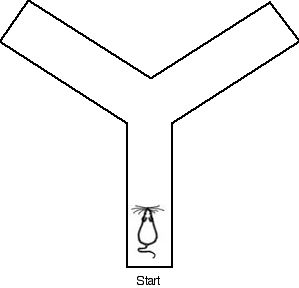
Tolman’s queries revolved around the mental
processes of humans and animals, specifically learning. His studies showed that
rats don’t need reinforcement to effectively find their way to the cheese.
Despite his critics, his work eventually led to the theory of latent learning -
learning that occurs in the absence of an obvious reward.
People learn latently all day long. Conscious learning, on the other hand, of new ideas or new syntax is nothing more than a knead into
our short-term memory (phone numbers, addresses, to-do lists). Moreover, conscious learning should be
governed in the breadth of a large company. This discernment is important
because of myopic properties in the act of learning. And yet this discernment
shouldn’t be overcooked. Learning is, no matter the circumstance, a catalyst to
problem solving.
A problem
in this context is defined as a deviation from the expected standard, defined
in terms of content, location, timing and distribution.
Take away points will be responses to these
questions:
- How does leadership situate learning into problem solving?
- How does leadership decide if the culture of learning is not in the best interest of the organization?
- What strategy is ideal for a team whose costs of learning are higher than the perceived benefits?
Learning Myopia
Myopia, in this context, is defined as management's failure to recognize scope. Avoiding myopia is therefore attained through properly articulating a problem to be solved and communicating both the problem and the solution. The dimension of communication is more complicated than articulation in that the solution can be communicated to the wrong person or (frequently) lost in the failure to communicate at all.
In assessing an organization’s support for
learning, we’re assuming that learning is providing value. We’re assuming that
it’s in the interest of the company’s culture, that it’s maximizing profit, or
that it’s the foundation of other peripheral benefits. But sometimes it’s not.
Consider the division of an organization’s adaptive intelligence into two types of
engagement – exploration and exploitation. Exploration is the pursuit of new
knowledge, of things that might come to be known. Exploitation is the use and
development of things already known. An organization that engages exclusively
in exploration will ordinarily suffer from the fact that it never gains the
returns of its knowledge - a deficit of experience and meaningful intellectual property. An organization that engages exclusively in
exploitation will ordinarily suffer from obsolescence - competitors better optimized for exploration will soon absorb the laggards' core competencies.
Organizations have to optimize their shares of
exploration and exploitation. Maintaining a balance between the two is
complicated not only by the difficulty of determining what the appropriate
balance should be, but also by several ways in which learning itself
contributes to imbalances.

The collective intelligence of the organization is typically
in flux and leadership must facilitate an environment conducive to adaptive
learning with an explicit, appropriate allocation of resources to exploration
and exploitation.
If management weighs the pros and cons of exploration and exploitation, the assumption is that there is a perceived value in learning. In this context, the value of learning is its role in problem solving. As there are two variations of learning, there are also two important realms of problem solving: structured and dynamic.
Structured Problem Solving
Structured problem solving is a step-by-step voyage to a solution with little deviation. Consider problem-based learning. Problem-based learning started in 1968 in the field of Health Sciences with Barrows at McMaster University. Today it's becoming a part of Harvard Business School's case study method, but isn't a fully-fledged curriculum. It's a systematic approach to problem solving.
Dynamic Problem Solving
The art of negotiation is an appropriate space for studying dynamic problem solving. Sharp negotiators prepare extensively but leave room for structured uncertainty, serendipity. They must learn and apply what they have learned rapidly.
Take-Away Points
Structured Problem Solving
Structured problem solving is a step-by-step voyage to a solution with little deviation. Consider problem-based learning. Problem-based learning started in 1968 in the field of Health Sciences with Barrows at McMaster University. Today it's becoming a part of Harvard Business School's case study method, but isn't a fully-fledged curriculum. It's a systematic approach to problem solving.
- Students are presented with a problem that they address without research, only prior knowledge.
- They analyze and articulate aspects of the problem.
- They discuss the problem in groups of 5 to 8 and further activate prior knowledge.
- They refine their hypothesis at regular intervals.
- They identify what they need to know to better understand the mechanics of the problem.
- The group is adjourned and each member engages in self-directed study. This could mean consulting others on different nuances of the problem or accessing other types of information.
- The group reassembles to present individual study with the use of visual aids.
Dynamic Problem Solving
The art of negotiation is an appropriate space for studying dynamic problem solving. Sharp negotiators prepare extensively but leave room for structured uncertainty, serendipity. They must learn and apply what they have learned rapidly.
Take-Away Points
- How does leadership decide if the culture of learning is not in the best interest of the organization?
- A leadership team can appraise the output of learning policies using the criteria of exploration versus exploitation. Adjustments to the allocation of resources can be made according to selected metrics that are relative to the state of the company.
- How does leadership situate learning into problem solving?
- Unlike a college curriculum, organizations have very little room for error. In sales functions where negotiation is vital, classes should be offered. Dynamic problem solving is a skill that relies heavily on intuition. Classes can provide guidance.
- What strategy is ideal for a team whose costs of learning are higher than the perceived benefits?
- The team should engage in exploitation learning and use what they have already established to pursue further returns.
Thursday, November 7, 2013
Video Games
Video games are being introduced to the organizational landscape to aid learning and innovation. Note: this is not authored with a gamer's bias. I'm skeptical of any utility a gamer claims there is in a video game. Yet recent studies suggest that strategic leadership should use virtualization and gaming to engage their organizations. The rich immersive experience of virtual reality provides new opportunities for effective learning, working, and especially innovation.
Virtual Worlds @ IBM
In the early 90s, IBM's bureaucratic culture damaged its ability to innovate and they couldn't compete with the faster, more lightweight companies. They've since become a leading tech organization with a history of success in a fluid, volatile industry. In 2007, they were the subject of a very interesting case study on how learning and technology work together in an organization.
Virtual reality is defined as a computer-simulated environment that can stimulate physical presence in real or imaginary places. Over the past two decades, its use has gone from single/multiplayer living room entertainment to game collaboration over a network. The use of virtual reality in a collaborative context is seen as an extension of other information technologies such as video conferencing, social networks, and IM, but their intense and rich personal "immersive" experiences and visualization capacities potentially provide new opportunities for effective learning and working. (Dodgson, 1361)
Virtual worlds went viral in IBM through the creation of an internal community - the Virtual Universe Community (VUC). The VUC grew so organically that there is uncertainty within IBM on the exact date of its creation. (Dodgson, 1368 )
In 2008, the global financial crisis slapped spending constraints on everybody and IBM's annual meeting of its Academy of Technology was put on hold to reduce travel costs. The decision was therefore made to hold the meeting in a virtual world, which saved IBM an estimated $300,000. Using Second Life virtual world software, the Academy of Technology met in a virtual innovation studio on September 28, 2009.

Learning
An organizational feature that stimulates learning is the ability to self-organize. Learning thrives with the support of a group that has formed their own community of interest (Dodgson 1362 ). A virtual world's connection to play has important implications for learning. Also, it has a positive connotation on the correlation between social capital and creativity (Obukhova, 2205).
One way virtual worlds encouraged this sort of collaboration at IBM was in the way they were being used to create interesting spaces for collaboration - a virtual lounge, a corporate boardroom, or avatars gathered around a bonfire. One participant said,
"We were passionate about the opportunities of cocreating content in virtual worlds and created a virtual campfire where we met to discuss the possibility of becoming a thought leader and developer."
Creativity in the environment was also seen in the groups' selections of avatars - CGI representations of end users.
Virtual Worlds & Innovation
Wikis are web applications that allow users to add, modify, or delete content in collaboration with others. Their accuracy is debatable, but that's the point. One of the advantages of a wiki is the number of stories that get told. To the theme of innovation, this is what organizational behavior calls an open idea-generation process. Companies are beginning to tap into distributed creativity and knowledge. And agreeably, one of the advantages of an open idea-generation process is the number of ideas that become available. (King and Lakhani 42)
IBM's InnovationJam, a massive internal idea query that engages tens of thousands of employees at a time, showcased its results in the virtual world. It was the first time a Fortune 500 CEO appeared in avatar form.

In the brainstorming area, members of the team were encouraged to type up any idea that they had, which formed a bubble that floated around in the virtual space. The next person could assess the idea and click on it if he or she likes it. This inflated the bubble, thus attracting more attention from other colleagues. (Dodgson 1367)
Take-Away Points
Virtual Worlds @ IBM
 |
| IBM |
Virtual reality is defined as a computer-simulated environment that can stimulate physical presence in real or imaginary places. Over the past two decades, its use has gone from single/multiplayer living room entertainment to game collaboration over a network. The use of virtual reality in a collaborative context is seen as an extension of other information technologies such as video conferencing, social networks, and IM, but their intense and rich personal "immersive" experiences and visualization capacities potentially provide new opportunities for effective learning and working. (Dodgson, 1361)
Virtual worlds went viral in IBM through the creation of an internal community - the Virtual Universe Community (VUC). The VUC grew so organically that there is uncertainty within IBM on the exact date of its creation. (Dodgson, 1368 )
In 2008, the global financial crisis slapped spending constraints on everybody and IBM's annual meeting of its Academy of Technology was put on hold to reduce travel costs. The decision was therefore made to hold the meeting in a virtual world, which saved IBM an estimated $300,000. Using Second Life virtual world software, the Academy of Technology met in a virtual innovation studio on September 28, 2009.

Learning
An organizational feature that stimulates learning is the ability to self-organize. Learning thrives with the support of a group that has formed their own community of interest (Dodgson 1362 ). A virtual world's connection to play has important implications for learning. Also, it has a positive connotation on the correlation between social capital and creativity (Obukhova, 2205).
 |
| Virtual Balcony Meeting |
"We were passionate about the opportunities of cocreating content in virtual worlds and created a virtual campfire where we met to discuss the possibility of becoming a thought leader and developer."
Creativity in the environment was also seen in the groups' selections of avatars - CGI representations of end users.
Virtual Worlds & Unstructured Data
Big data is the memory of an organization. (Roberts, 22) Interestingly, tests in IBM showed that the collaboration in virtual worlds had the capacity to convey more human signals than conference calls. They provided experimental spaces where new people could join and allowed people to express themselves by hand gestures and passing objects to one another. One engineer suggested,
"Virtual meetings can be engineered to create serendipitous events." (Dodgson 1366)
Now, more than ever, deriving value from serendipitous data is critical in the business environment. HR has to use data to drive employee behaviors, making sure those behaviors are measured, monitored and shaped to achieve business goals. (Roberts 22)
With that, consider two things. First, with virtualization there is an inherent ability to compile an avalanche of data on the social cues of collaboration. Second, what would this data mean and how could a leadership team use it? And taking this a step further, what conclusions would management be able to draw when this is mined with unstructured data sources like social media or wikis?
Big data is the memory of an organization. (Roberts, 22) Interestingly, tests in IBM showed that the collaboration in virtual worlds had the capacity to convey more human signals than conference calls. They provided experimental spaces where new people could join and allowed people to express themselves by hand gestures and passing objects to one another. One engineer suggested,
"Virtual meetings can be engineered to create serendipitous events." (Dodgson 1366)
Now, more than ever, deriving value from serendipitous data is critical in the business environment. HR has to use data to drive employee behaviors, making sure those behaviors are measured, monitored and shaped to achieve business goals. (Roberts 22)
With that, consider two things. First, with virtualization there is an inherent ability to compile an avalanche of data on the social cues of collaboration. Second, what would this data mean and how could a leadership team use it? And taking this a step further, what conclusions would management be able to draw when this is mined with unstructured data sources like social media or wikis?
Virtual Worlds & Innovation
Wikis are web applications that allow users to add, modify, or delete content in collaboration with others. Their accuracy is debatable, but that's the point. One of the advantages of a wiki is the number of stories that get told. To the theme of innovation, this is what organizational behavior calls an open idea-generation process. Companies are beginning to tap into distributed creativity and knowledge. And agreeably, one of the advantages of an open idea-generation process is the number of ideas that become available. (King and Lakhani 42)
IBM's InnovationJam, a massive internal idea query that engages tens of thousands of employees at a time, showcased its results in the virtual world. It was the first time a Fortune 500 CEO appeared in avatar form.

In the brainstorming area, members of the team were encouraged to type up any idea that they had, which formed a bubble that floated around in the virtual space. The next person could assess the idea and click on it if he or she likes it. This inflated the bubble, thus attracting more attention from other colleagues. (Dodgson 1367)
Take-Away Points
- IBM created a virtual world strategy document in 2007 that recognized the importance of play, collaboration and learning. (Dodgson 1367)
- One way virtual worlds encouraged collaboration at IBM was in the way they were being used to create interesting spaces for collaboration.
- Data analysis that supports virtualization's effects on learning and innovation should be social, open through Wiki software, and automated.
- Dodgson, Mark. Organizational Learning and the Technology of Foolishness: The Case of Virtual Worlds at IBM. Organization Science. 2013, 24:1358-1376.
- King, Andrew. Using Open Innovation to Identify the Best Ideas. MIT Sloan Management Review. 2013, 55: 41-48.
- Roberts, Bill. The Benefits of Big Data. HR Magazine. 2013, 58: 21-30.
- Obukhova, Elena. Do Job Seekers Benefit from Contacts? A Direct Test with Contemporaneous Searches. Management Science. 2013, 59: 2204-2216
Subscribe to:
Posts (Atom)