Edward Chace Tolman, the Harvard man whose
experiment is more famous than he is, studied rats in mazes.
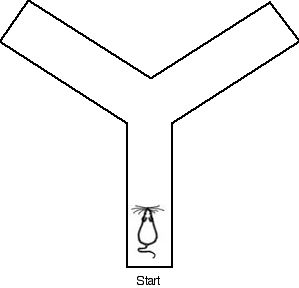
Tolman’s queries revolved around the mental
processes of humans and animals, specifically learning. His studies showed that
rats don’t need reinforcement to effectively find their way to the cheese.
Despite his critics, his work eventually led to the theory of latent learning -
learning that occurs in the absence of an obvious reward.
People learn latently all day long. Conscious learning, on the other hand, of new ideas or new syntax is nothing more than a knead into
our short-term memory (phone numbers, addresses, to-do lists). Moreover, conscious learning should be
governed in the breadth of a large company. This discernment is important
because of myopic properties in the act of learning. And yet this discernment
shouldn’t be overcooked. Learning is, no matter the circumstance, a catalyst to
problem solving.
A problem
in this context is defined as a deviation from the expected standard, defined
in terms of content, location, timing and distribution.
Take away points will be responses to these
questions:
- How does leadership situate learning into problem solving?
- How does leadership decide if the culture of learning is not in the best interest of the organization?
- What strategy is ideal for a team whose costs of learning are higher than the perceived benefits?
Learning Myopia
Myopia, in this context, is defined as management's failure to recognize scope. Avoiding myopia is therefore attained through properly articulating a problem to be solved and communicating both the problem and the solution. The dimension of communication is more complicated than articulation in that the solution can be communicated to the wrong person or (frequently) lost in the failure to communicate at all.
In assessing an organization’s support for
learning, we’re assuming that learning is providing value. We’re assuming that
it’s in the interest of the company’s culture, that it’s maximizing profit, or
that it’s the foundation of other peripheral benefits. But sometimes it’s not.
Consider the division of an organization’s adaptive intelligence into two types of
engagement – exploration and exploitation. Exploration is the pursuit of new
knowledge, of things that might come to be known. Exploitation is the use and
development of things already known. An organization that engages exclusively
in exploration will ordinarily suffer from the fact that it never gains the
returns of its knowledge - a deficit of experience and meaningful intellectual property. An organization that engages exclusively in
exploitation will ordinarily suffer from obsolescence - competitors better optimized for exploration will soon absorb the laggards' core competencies.
Organizations have to optimize their shares of
exploration and exploitation. Maintaining a balance between the two is
complicated not only by the difficulty of determining what the appropriate
balance should be, but also by several ways in which learning itself
contributes to imbalances.

The collective intelligence of the organization is typically
in flux and leadership must facilitate an environment conducive to adaptive
learning with an explicit, appropriate allocation of resources to exploration
and exploitation.
If management weighs the pros and cons of exploration and exploitation, the assumption is that there is a perceived value in learning. In this context, the value of learning is its role in problem solving. As there are two variations of learning, there are also two important realms of problem solving: structured and dynamic.
Structured Problem Solving
Structured problem solving is a step-by-step voyage to a solution with little deviation. Consider problem-based learning. Problem-based learning started in 1968 in the field of Health Sciences with Barrows at McMaster University. Today it's becoming a part of Harvard Business School's case study method, but isn't a fully-fledged curriculum. It's a systematic approach to problem solving.
Dynamic Problem Solving
The art of negotiation is an appropriate space for studying dynamic problem solving. Sharp negotiators prepare extensively but leave room for structured uncertainty, serendipity. They must learn and apply what they have learned rapidly.
Take-Away Points
Structured Problem Solving
Structured problem solving is a step-by-step voyage to a solution with little deviation. Consider problem-based learning. Problem-based learning started in 1968 in the field of Health Sciences with Barrows at McMaster University. Today it's becoming a part of Harvard Business School's case study method, but isn't a fully-fledged curriculum. It's a systematic approach to problem solving.
- Students are presented with a problem that they address without research, only prior knowledge.
- They analyze and articulate aspects of the problem.
- They discuss the problem in groups of 5 to 8 and further activate prior knowledge.
- They refine their hypothesis at regular intervals.
- They identify what they need to know to better understand the mechanics of the problem.
- The group is adjourned and each member engages in self-directed study. This could mean consulting others on different nuances of the problem or accessing other types of information.
- The group reassembles to present individual study with the use of visual aids.
Dynamic Problem Solving
The art of negotiation is an appropriate space for studying dynamic problem solving. Sharp negotiators prepare extensively but leave room for structured uncertainty, serendipity. They must learn and apply what they have learned rapidly.
Take-Away Points
- How does leadership decide if the culture of learning is not in the best interest of the organization?
- A leadership team can appraise the output of learning policies using the criteria of exploration versus exploitation. Adjustments to the allocation of resources can be made according to selected metrics that are relative to the state of the company.
- How does leadership situate learning into problem solving?
- Unlike a college curriculum, organizations have very little room for error. In sales functions where negotiation is vital, classes should be offered. Dynamic problem solving is a skill that relies heavily on intuition. Classes can provide guidance.
- What strategy is ideal for a team whose costs of learning are higher than the perceived benefits?
- The team should engage in exploitation learning and use what they have already established to pursue further returns.

No comments:
Post a Comment